Curiosity & Career Success
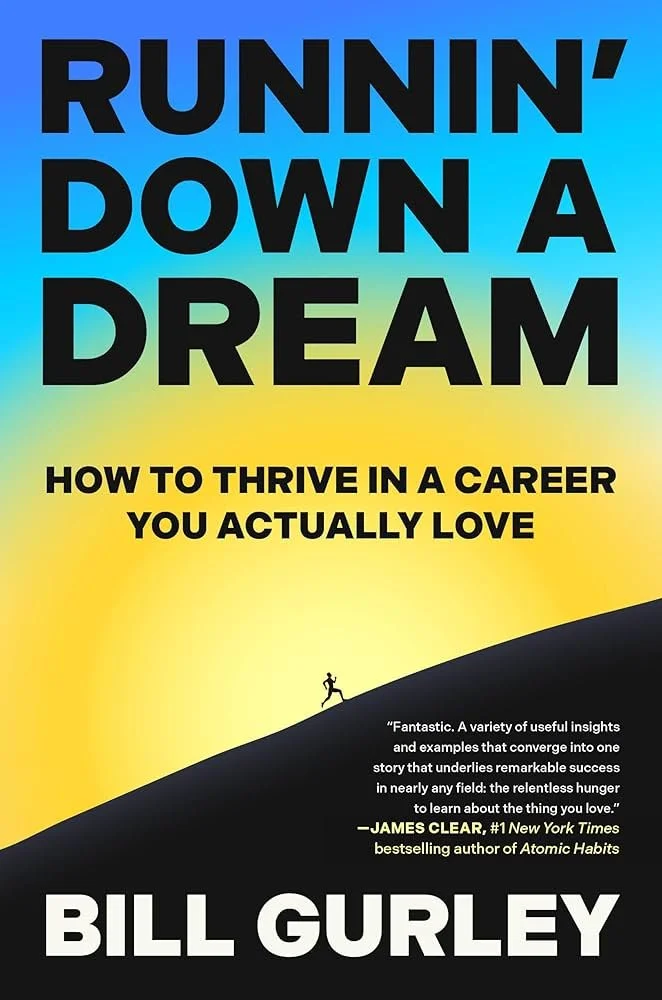
Bill Gurley, longtime Silicon Valley investor and former general partner at Benchmark Capital, just released a new book, Runnin’ Down a Dream: How to Thrive in a Career You Actually Love. The book is kind of a career guide that shows you how to get into a career you love and are passionate about. It's a nice counterpoint to the more traditional career services programs you see in colleges, which are largely focused on practical career paths for large numbers of people. The book toggles between career advice and a story about a successful person who put it into practice.
I'd definitely recommend this book to college students, parents of college students, and even parents of younger kids who are thinking about how to talk to their kids about a successful career.
One idea that really stuck with me was the notion of “chasing your curiosity.” The best people in a field aren’t just working on it during the day — they’re obsessively curious about it all the time. They read constantly. Not because their boss wants them to, but because they can’t help themselves. At some point, the reading stops feeling like homework and starts feeling like entertainment.
Ideally, the hours you spend reading about your craft don’t feel like work, but they quietly compound into extreme expertise and give you a massive edge. While someone else might read one article about their industry a week, the curious person reads hundreds of pages a month — books, essays, interviews, earnings call transcripts, etc. Over time, that creates an enormous informational advantage. When reading about your field feels the same as watching a movie, you’ve found a real cheat code.
This resonated with me because I’ve been lucky enough to spend most of my career working on problems I was genuinely curious about, where I'd think, read, and write about them in my free time. That advantage has served me really well.
Of course, this doesn't work if you're not curious and passionate about your field or the function you work in. If you're a biotech equity analyst but you're not curious and passionate about it, your work is going to feel like drudgery, and you're just not going to be nearly as good at your job as the person who stays up at night reading clinical trial results and studying drug pipelines. There’s zero chance you can compete with that.
This is a great mindset for young people to adopt as they consider what they want to do with their careers. In this context, well-meaning parents who push their kids to pursue more traditional, lower-risk, clearly defined career paths are really asking their kids to make a tradeoff: safety and practicality over joy and the chance to be exceptional.